

Rug Display Racks: Choosing the Right Capacity and Format for a Flooring Showroom
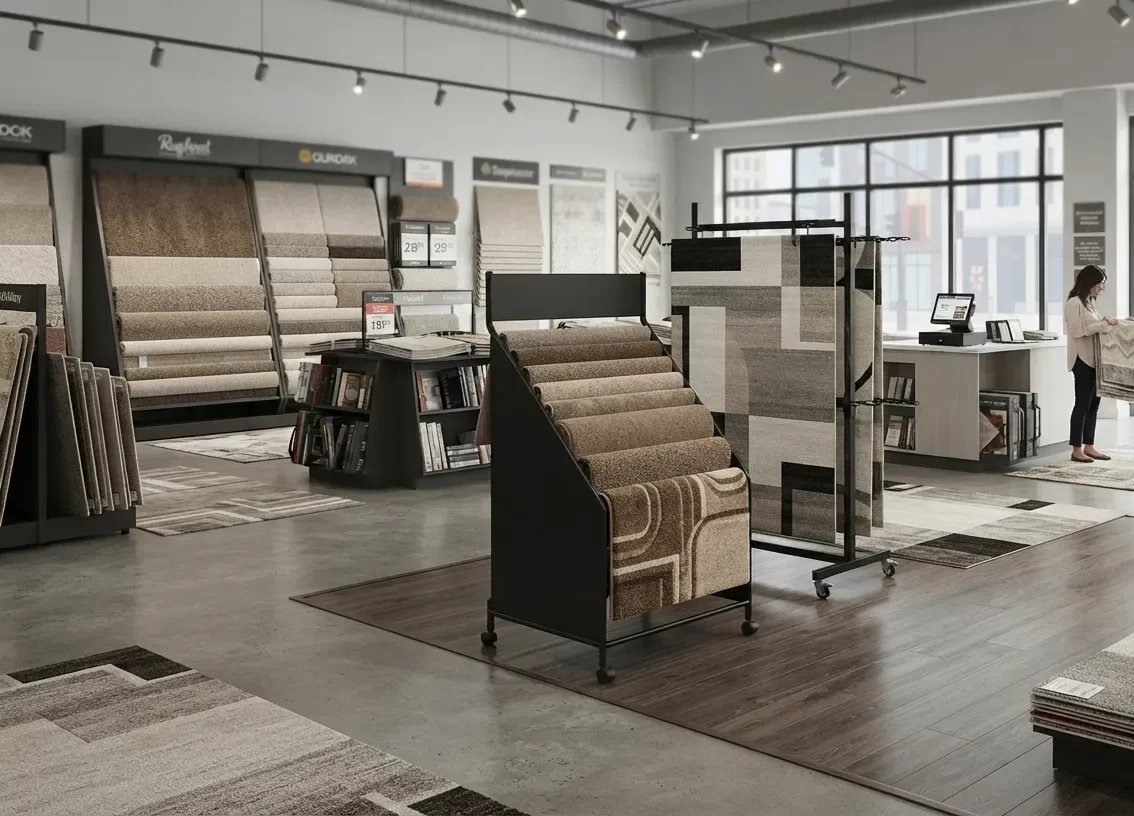
Choose rug display racks that balance sample capacity, customer access and showroom space. Compare Jarvis Martin’s available display formats.
The best rack is not necessarily the one that holds the most rugs. Retailers need a display that suits sample dimensions, floor area, customer handling, replenishment and the way staff present the range.
What Are Rug Display Racks?
Rug display racks are purpose-built retail fixtures that store and present hanging or supported rug samples in an organised showroom format. Depending on the design, customers or staff can separate, swing or slide samples for easier comparison without stacking stock across the floor.
Jarvis Martin supplies rug display solutions through Retail Display Stands, including multi-bay and sliding formats for different rug sizes and capacities.
Start with the Samples You Need to Display
Before comparing rack dimensions, document the size, weight and quantity of rugs that will be presented. A rack designed for smaller or lighter samples may not be suitable for a larger range simply because the samples physically fit.
Confirm:
- maximum rug dimensions and approximate weight;
- number of samples displayed at one time;
- whether customers or only staff will operate the rack;
- aisle clearance and nearby furniture;
- delivery access and assembly requirements; and
- how frequently the range will be changed.
Product specifications should guide the decision. For example, Jarvis Martin’s four-bay rug rack is described for four rugs measuring 1700 mm by 2400 mm, while available sliding systems have different capacities and footprints.
Capacity Must Work with Customer Movement
A high-capacity rack can conserve wall or floor space, but only if customers can browse it comfortably. The operating arc or sliding path must remain clear, and nearby displays should not obstruct sample movement.
Place the rack where customers can pause without blocking the main circulation path. Staff also need enough room to return samples safely and keep the display presentation consistent. If the showroom serves families, designers and trade buyers at the same time, wider browsing zones may reduce congestion around popular collections.
Compare Product Availability and Installation Needs
Check current stock status, lead time, delivery method and whether assembly is required before planning a showroom reset. Product availability can change, and not every rack format will suit every rug size.
Retailers needing a broader merchandising solution can also discuss design, manufacturing and powder-coating services with Jarvis Martin. This is more useful than assuming an off-the-shelf fixture can be modified after purchase.
Select a Rack Around the Showroom
Measure the proposed location, record the sample specifications and identify how customers will interact with the display. These details allow the supplier to recommend a more suitable format and reduce the risk of ordering the wrong capacity.
Browse rug display racks or contact Jarvis Martin to confirm dimensions, stock availability and delivery requirements for your flooring showroom.
Optimized by: Netwizard SEO